
The Future of Browser Extensions: Trends for 2026
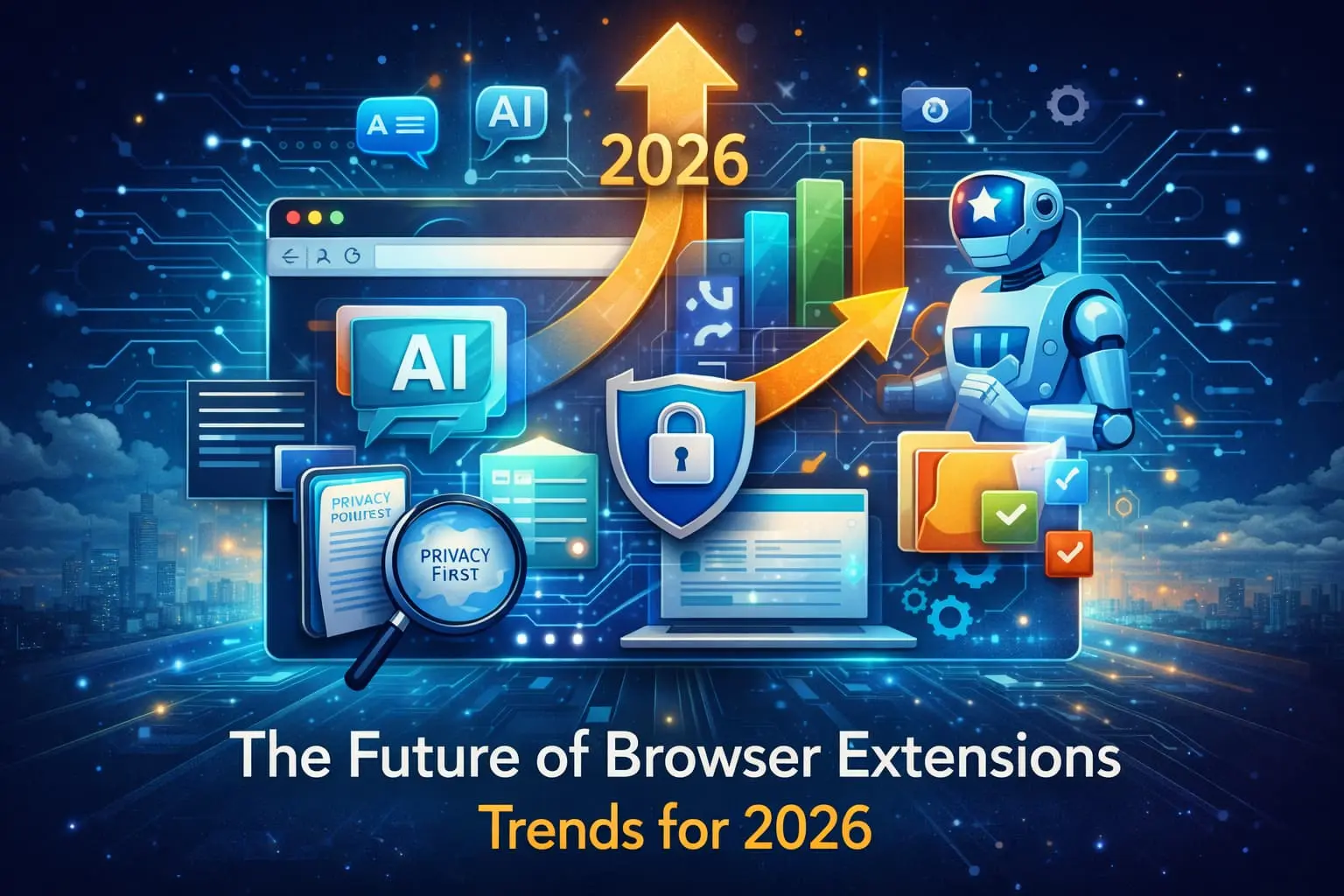
Introduction
Browser extensions have quietly become one of the most powerful layers of the modern web. Once limited to ad blockers and password managers, they now shape how we research, write, analyze data, automate tasks, and even convert content into documents.
As we enter 2026, browser extensions are evolving faster than ever — driven by AI, privacy concerns, and the demand for productivity-first workflows.
This article explores the key trends defining the future of browser extensions in 2026 and what they mean for users, developers, and online businesses.
1. AI-Powered Extensions Become the Norm
Artificial intelligence is no longer a "bonus feature" — it's becoming the backbone of modern extensions.
In 2026, we see:
Extensions are shifting from tools you activate to assistants that work in the background, understanding what you do and offering help at the right moment.
This dramatically reduces friction and turns the browser into an intelligent workspace.
2. Privacy-First Design Is No Longer Optional
With growing awareness around data privacy and regulations, users are far more cautious about what extensions they install.
Key privacy trends include:
Extensions that fail to communicate how user data is handled are increasingly ignored or removed. In 2026, trust is a feature, not a legal footnote.
3. Extensions as Productivity Operating Systems
Browser extensions are moving beyond single-purpose tools.
Instead of "one extension = one feature," we now see:
For many professionals, the browser has replaced the desktop OS. Extensions are becoming the control layer that connects research, writing, documentation, and publishing.
4. Lightweight SaaS via Browser Extensions
A major shift in 2026 is the rise of extension-first SaaS products.
Instead of forcing users to:
Companies deliver value directly inside the browser.
This approach:
Many successful tools now use extensions as the primary product, not just a companion.
5. Better Performance and Security Standards
Browser vendors are enforcing stricter rules on extensions to protect users.
As a result:
Developers are pushed to build faster, cleaner, and safer extensions — which benefits everyone.
6. Monetization Models Are Maturing
The era of "free but invasive" extensions is fading.
In 2026, sustainable models include:
Users are more willing to pay for extensions that:
Quality now outperforms quantity.
7. Extensions Become Invisible — and That's a Good Thing
The best extensions of 2026 are often the ones you barely notice.
They:
This shift toward invisible productivity reflects a deeper understanding of user experience: tools should adapt to humans, not the other way around.
What This Means for the Future
Browser extensions are no longer secondary tools — they are becoming core infrastructure for how we work online.
For users, this means:
For builders and businesses, it means:
Final Thoughts
In 2026, the browser is no longer just a window to the web — it's the workspace itself.
Browser extensions are shaping this transformation by combining AI, privacy, and automation into seamless experiences.
The future belongs to extensions that are:
And this evolution has only just begun.